Blocklist Extortion: The UCEPROTECT RBL Scam

What Is a Realtime Blackhole List (RBL)?
An RBL contains a list of mail servers, domain names, and IP addresses associated with hosting providers that produce, distribute, or otherwise contribute to spam.
RBLs are a great tool in your security arsenal. You are very likely using them without even knowing it, as virtually all email providers rely on RBLs to check which servers and IPs are sending SPAM or other abusive content.
As security professionals, we usually base our decisions on whether a site, server, or IP is malicious on the verdicts of well-known RBLs using tools like MXToolbox, IPVoid, Talos, and others.
But have you ever wondered: Can I trust these verdicts? Could a blocklist add my server or my entire network by mistake—or on purpose?
Why UCEPROTECT Is a Scam.
There are multiple reports across the web documenting the indiscriminate listing of IPs—and even entire ASNs—for unverified malicious activity, and some cases that would be outright impossible.
Paying for “Express Delisting”
Once UCEPROTECT puts you on their blacklist, you get notified, as happened in this case with the company SUCURI:
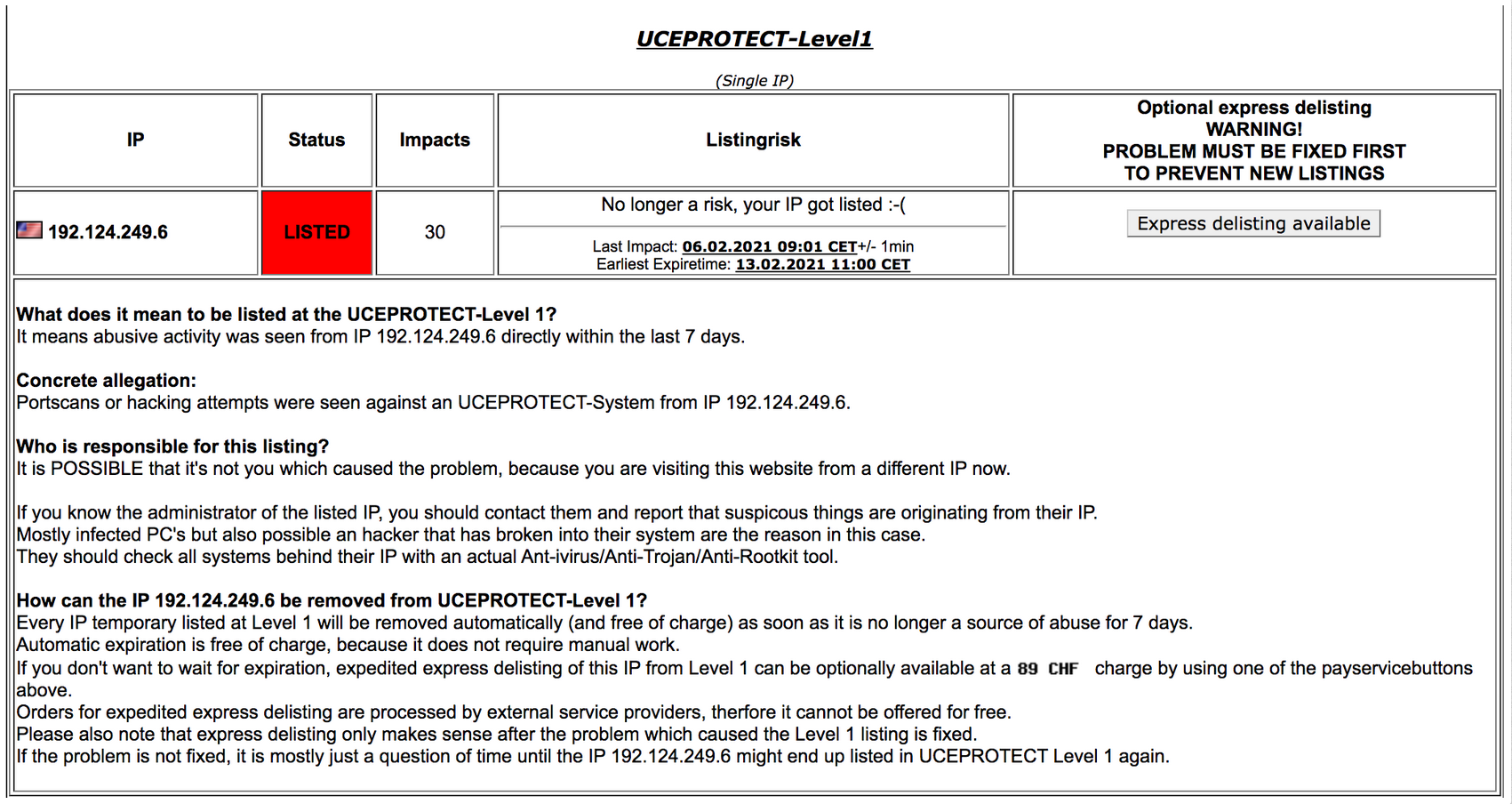
In this case, the IP of their WAF service—which only RECEIVES requests from their clients—was listed for carrying out malicious activity.
But no problem: the folks at UCEPROTECT give you two options:
- Wait 7 days to be automatically removed (they will remove you anyway, even if they supposedly consider you a malicious server).
- Pay for immediate delisting. The fee is approximately $100 USD (PER BLOCKED IP).

(Real) Threats to Users and Security Flaws
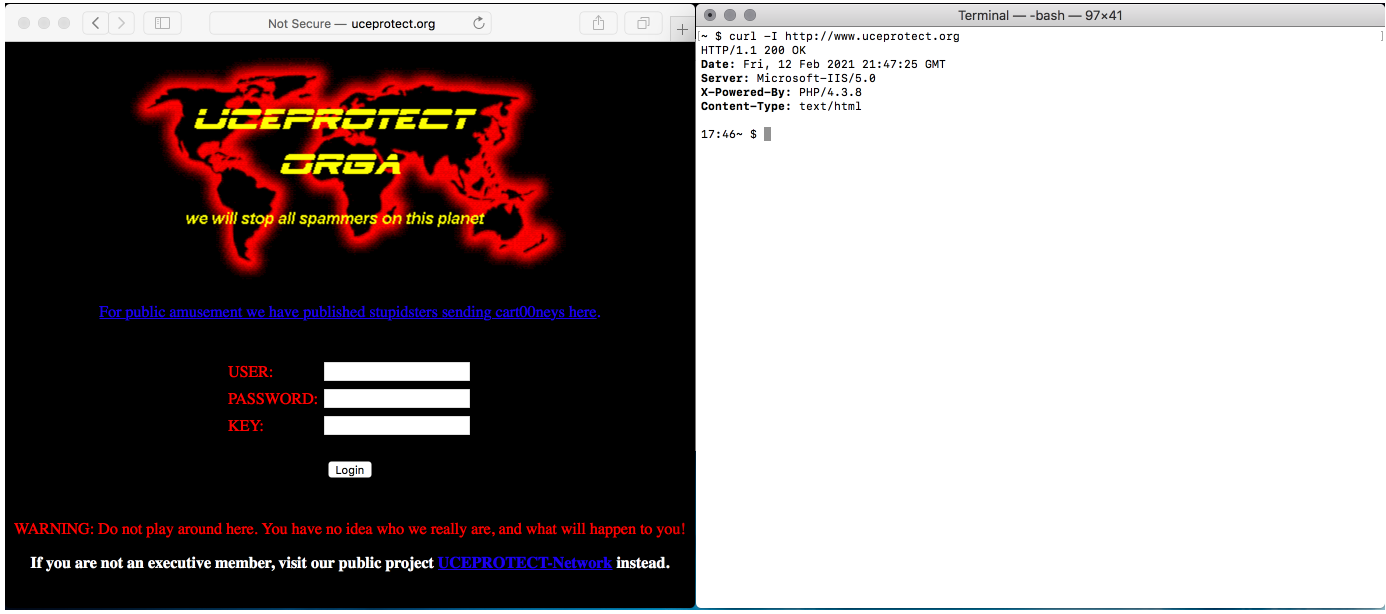
If you visit the UCEPROTECT website, the first thing you will notice is a 1990s-style design and no SSL whatsoever.
What you will find are threats aimed at anyone who dares to complain about their wonderful service. They state that they will not hesitate to tarnish your reputation and disclose your personal data at the slightest provocation.
It is written right there in their policies!

Not only that—on another of their affiliated sites you will find even more security flaws, such as a website without SSL, a 20-year-old operating system, and a 17-year-old version of PHP.
And you will also find… more threats!!
Conclusion
To wrap up, it is easy to see that this RBL’s business model raises red flags everywhere. That is why I urge the entire cybersecurity community to speak out and, above all, not to use (and especially never pay) UCEPROTECT.
It is disappointing how a malicious company can make a business out of holding entire networks hostage without justification, yet even more disappointing that we keep using them.
This post is a compilation of information from other whistleblowers, especially SUCURI, originally brought together in Spanish.
Sources
https://conetix.com.au/support/uceprotect-email-protection-scam/
https://www.inmotionhosting.com/support/news/uceprotect-rbl-scam/
https://blog.sucuri.net/2021/02/uceprotect-when-rbls-go-bad.html
Image by rawpixel.com on Freepik